Circadian Rhythm Lighting: Improve Your Sleep Stages
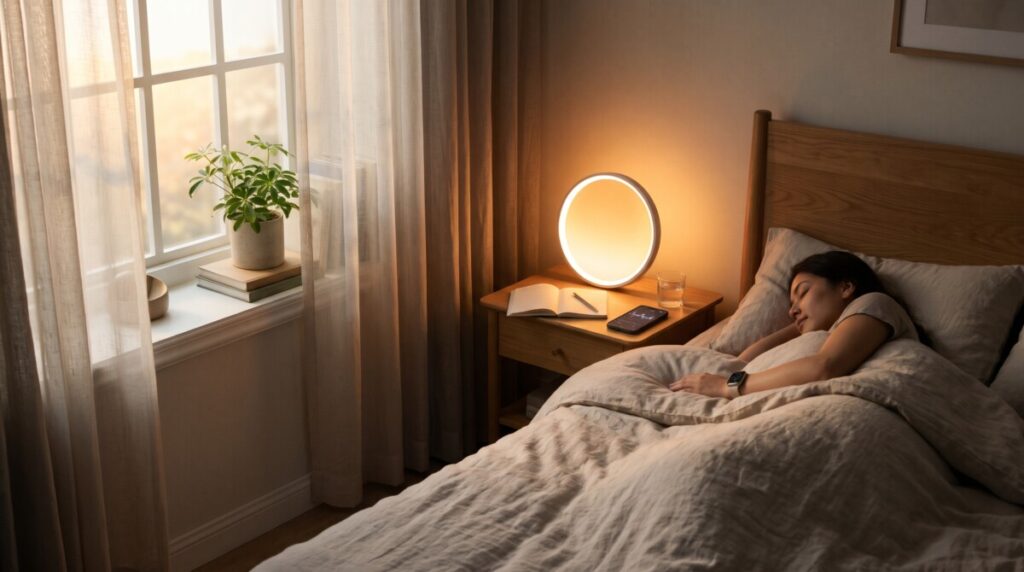
Modern indoor routines often isolate us from natural sunlight, severely disrupting the internal clocks that govern human recovery. We spend over ninety percent of our days under static artificial bulbs that confuse biological signaling pathways. This chronic light misalignment degrades sleep architecture, leaving millions of individuals fatigued despite spending eight hours in bed. In this guide, we examine how dynamic light environments directly reshape restorative rest and daytime vitality. Let us explore the physiological mechanisms connecting ambient light exposure to neurological rejuvenation.
https://ea391pu8t33vfs9ate1ozm3s3z.hop.clickbank.net
Key Takeaways
Dynamic 24-hour light cycles synchronize the master clock to increase both slow-wave and REM sleep phases.
Evening blue-wavelength exposure suppresses nocturnal melatonin secretion, which fragments the essential recovery stages of sleep architecture.
Achieving restorative sleep requires combining morning high-intensity blue-enriched light with dim, warm-amber hues after dusk.
How circadian lighting regulates core sleep stages
Dynamic indoor lighting stabilizes the human circadian pacemaker located within the suprachiasmatic nucleus. Specialized retinal ganglion cells detect blue wavelengths between 460 and 480 nanometers, suppressing melatonin synthesis during daylight hours. This sustained daytime suppression promotes early nocturnal melatonin release, accelerating sleep onset and stabilizing non-REM slow-wave sleep. Clinical trials reveal that synchronized light exposures produce higher sleep efficiency and reduce midnight awakenings significantly. Consequently, proper spectral distribution throughout the day safeguards the deep recovery phases vital for cellular repair and memory consolidation.
https://e4715kxzoazsnm1l-3qcwh9zbo.hop.clickbank.net
Common pitfalls of residential circadian light systems
Installing tunable indoor fixtures does not guarantee optimal sleep architecture if personal behavioral habits remain unaddressed. Many smart bulbs lack sufficient melanopic lux output during morning hours to trigger full neurological alertness. Conversely, users frequently counteract their dimming fixtures by using handheld electronic displays containing concentrated blue-light spectrums right before bed. Miscalculating light color temperature transitions can also delay natural phase shifts rather than advancing them appropriately. Without strict schedule consistency, biological entrainment fails to materialize regardless of fixture sophistication.
Practical methods to design healthy indoor lighting
Establishing an effective circadian environment requires deliberate spectral shifts aligned with the solar cycle. Homeowners should schedule bright, cool lighting exceeding 500 melanopic lux during the first two hours of morning work. As evening approaches, interior spaces should transition to diffuse amber illumination below 50 lux that emits zero blue wavelengths. Emerging smart building systems now leverage ambient daylight sensors to automate dynamic color temperatures smoothly throughout the day. Investing in automated spectral transitions creates an effortless path toward stabilized sleep architecture and resilient daytime focus.
We cannot separate human cognitive health from the daily photic signals that guide our restorative sleep stages. When we align domestic lighting with ancient evolutionary biology, restorative deep sleep shifts from an elusive luxury into an attainable reality. Preserving fragile sleep architecture demands that we actively respect our internal biological clocks within built spaces. We must begin auditing our personal daily light habits today to reclaim truly restorative nightly rest.
https://serenity7wellness.com/index.php/2026/01/08/cozymaxxing-sleep-mood-enhancing-tips/
https://holisticwellnesswave.com/index.php/2025/10/28/elite-sleep-tips-for-peak-efficiency/
Frequently Asked Questions
What is circadian rhythm lighting?
https://82e60ov5l5zyjq3qxdj7qa69ae.hop.clickbank.net
Circadian rhythm lighting refers to artificial lighting systems designed to mimic natural daylight cycles throughout the day. These fixtures automatically adjust color temperature and brightness to reinforce biological rhythms, boosting morning alertness and facilitating natural nighttime melatonin production for deeper, healthier sleep cycles.
How does light exposure alter sleep architecture?
Light exposure directly controls nocturnal melatonin release through retinal signaling pathways. Bright daytime light deepens slow-wave recovery sleep, whereas evening blue-wavelength exposure fragments restorative sleep stages, shortens rapid eye movement sleep cycles, and increases nighttime awakenings.
Which light color is best before going to sleep?
Warm amber or red light is optimal before sleep because long wavelengths do not trigger melanopsin retinal receptors. This ambient environment prevents melatonin suppression, relaxes the central nervous system, and enables a seamless neurological transition into deep restorative sleep stages.