Slow-Travel Remote Work Blueprint for Southeast Asia
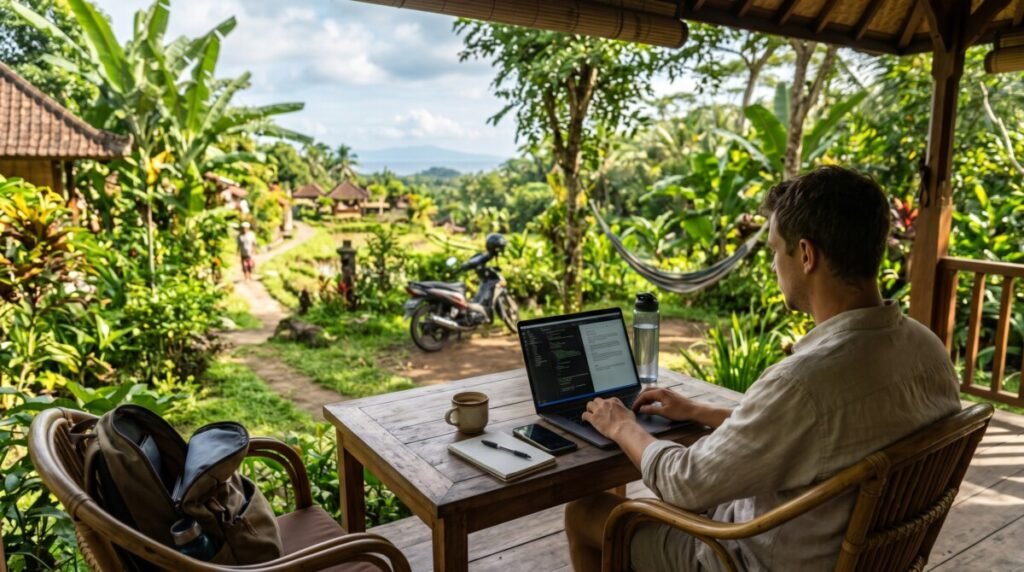
When domestic rent inflation began consuming more than half of our monthly income, we realized that traditional city living no longer offered financial peace. Escaping the endless cycle of domestic overhead forced us to rethink how we work, live, and build long-term savings. Establishing multi-month operational hubs across Southeast Asia allowed us to dramatically drop our fixed burn rate while simultaneously elevating our daily quality of life. By exchanging rushed two-week vacations for stable quarterly residencies, we discovered a sustainable career framework that fuels both professional deep work and personal discovery. The following operational blueprint outlines exactly how remote professionals can establish seamless, high-yield bases across the region’s leading digital capitals.
https://2d745okbr44ucq6-68yf7er43r.hop.clickbank.net
Key Takeaways
Relocating from Western metropolitan cores to Southeast Asian bases reduces core living overhead by up to sixty percent while preserving fast fiber-optic connectivity.
Thailand’s Destination Thailand Visa and Vietnam’s ninety-day electronic visa offer predictable legal rails for knowledge workers who plan residency transitions carefully.
Direct landlord lease negotiations and regional health coverage provide robust lifestyle security without the inflated premiums of short-stay tourist platforms.
Slow-travel remote work blueprint for Southeast Asia living
Establishing a stable base in Southeast Asia fundamentally realigns a knowledge worker’s operational balance sheet by substituting exorbitant domestic real estate costs with affordable, modern metropolitan infrastructure. In premier digital nomad hubs like Bangkok, Chiang Mai, and Da Nang, monthly expenditures for an elevated lifestyle consistently average between $900 and $1,800 per month. Modern residential condominiums in districts such as Bangkok’s On Nut or Chiang Mai’s Nimman neighborhood routinely feature dedicated coworking lounges, lap pools, and commercial gym facilities directly on-site. High-speed municipal fiber-optic internet networks across Thailand and Vietnam regularly deliver verified connection speeds exceeding 300 megabits per second for uninterrupted workflow execution. Consequently, remote professionals capture immense lifestyle value because local culinary services, affordable transit networks, and professional laundry support eliminate daily domestic friction.
| Operational Category | Bangkok, Thailand (Metro Base) | Chiang Mai, Thailand (Creative Base) | Da Nang, Vietnam (Coastal Base) |
| Furnished 1BR / Studio | $450 – $650 / month | $300 – $450 / month | $250 – $400 / month |
| Coworking Membership | $120 – $180 / month | $80 – $130 / month | $50 – $90 / month |
| Local Food & Dining | $300 – $450 / month | $200 – $320 / month | $180 – $280 / month |
| Transit (Grab & Rail) | $80 – $120 / month | $40 – $70 / month | $35 – $65 / month |
| High-Speed Mobile eSIM | $15 – $25 / month | $15 – $25 / month | $10 – $18 / month |
| Comprehensive Health Cover | $140 – $220 / month | $140 – $220 / month | $130 – $200 / month |
| Estimated Total Monthly Cost | $1,105 – $1,645 / month | $775 – $1,215 / month | $655 – $1,053 / month |
Multi-month base living operational risks and tax pitfalls
Sustaining a slow-travel lifestyle introduces distinct administrative hurdles, jurisdictional tax liabilities, and bureaucratic obligations that casual travelers rarely anticipate. Prolonged physical residency extending past 183 days inside a single fiscal year can inadvertently trigger domestic tax residency status under territorial revenue statutes. Furthermore, digital workers who fail to secure formal remote work permissions, such as Thailand’s Destination Thailand Visa, often expose themselves to arbitrary immigration crackdowns. Seasonal environmental hazards present another operational bottleneck, evidenced by severe agricultural burning season in Northern Thailand between February and April that heavily degrades air quality. Finally, relying strictly on standard international travel insurance creates major claim vulnerabilities, as conventional policies regularly deny coverage for routine clinic visits, chronic maintenance, or prolonged non-emergency treatments.
| Operational Vulnerability | Associated Risk Factors | Standard Industry Solution |
| Permanent Tax Establishment | Triggering local taxation on worldwide earnings after 183 physical days | Maintain strict tracking records and limit stays under local statutory residency ceilings. |
| Immigration Non-Compliance | Risking border entry denial through successive visa-free tourist runs | Secure formal entry documentation like Thailand’s 5-year DTV or Vietnam’s 90-day e-visa. |
| Seasonal Smog Disruption | PM2.5 air pollution peaks in Northern Thailand from February to April | Rotate operations south toward coastal hubs like Da Nang or southern Thai islands. |
| Medical Coverage Exclusions | Emergency-only travel policies rejecting outpatient care and claims | Transition to specialized expat health plans like SafetyWing Remote Health or Cigna Global. |
| Unstable Internet Redundancy | Power surges or local building ISP line cuts during critical calls | Equip dual-SIM setups featuring local 5G backup tethering alongside hotel fiber. |
Practical relocation strategies for high lifestyle value bases
https://01f7eqj-s6arhz9aqq8nz9xm75.hop.clickbank.net
Executing an efficient regional relocation requires an organized sequential transition across short-term accommodations, telecommunications procurement, and banking channels. Remote employees should initially reserve five to seven nights in a serviced apartment to inspect local neighborhoods and directly negotiate leases. Engaging building managers directly or utilizing regional listing platforms like DDproperty and RentHub secures standard monthly rental discounts of twenty to forty percent compared to Airbnb. Setting up local eSIMs via providers like AIS in Thailand or Viettel in Vietnam instantly delivers uncapped 5G data networks for less than twenty dollars a month. In addition, opening multi-currency accounts through platforms such as Wise enables instantaneous foreign exchange conversions, bypassing traditional bank wire markups and domestic ATM exchange fees.
| Logistical Domain | Primary Local Platforms | Actionable Execution Protocol |
| Apartment Sourcing | DDproperty, RentHub, Facebook Groups | Book a 5-day base, tour buildings in person, and negotiate multi-month contracts directly. |
| Lease Negotiation | Local Property Management Offices | Request an all-inclusive lease rate covering water, Wi-Fi, and cleaning services upfront. |
| Mobile Connectivity | AIS 5G (Thailand), Viettel (Vietnam) | Purchase local unlimited monthly data eSIM packages directly through official telco apps. |
| Banking & Cash Flow | Wise, Revolut, Charles Schwab Checking | Utilize mid-market exchange cards and withdraw maximum ATM limits to minimize flat ATM fees. |
| Health Insurance | SafetyWing Nomad, Genki, Luma Health | Maintain continuous inpatient and outpatient medical coverage exceeding $50,000 limits. |
These practical systems completely transformed our baseline overhead and granted us complete sovereignty over our working day. By anchoring ourselves in established hubs for months rather than bouncing across borders every week, we eliminated travel fatigue and built lasting international routines. Embracing the slow-travel blueprint proves that achieving personal wellness and high career output does not require sacrificing your balance sheet. We encourage every remote professional feeling trapped by domestic inflation to test a three-month residency experiment and experience the compound benefits firsthand.
https://serenity7wellness.com/index.php/2026/10/27/emotional-fitness-and-nervous-system-regulation/
https://fiscalfitnessflow.com/index.php/2025/11/06/20-budget-travel-hacks-for-cheap-flights-hotels/
Frequently Asked Questions
What are the visa requirements for remote workers in Thailand?
Thailand offers the Destination Thailand Visa, which grants remote workers a five-year multiple-entry status with 180-day stays per visit. Applicants must demonstrate proof of remote employment and hold at least 500,000 Thai Baht in verifiable bank savings.
How do digital nomads secure short-term apartment leases in Vietnam?
Nomads in Da Nang secure monthly apartments by booking several days in a hotel, then touring properties directly through local Facebook expat groups and rental agencies. Landlords routinely offer discounted one-to-three-month leases with utility packages, bypassing expensive online travel booking platform markups.
What is the average monthly cost of living for nomads in Da Nang?
A remote worker lives comfortably in Da Nang for $700 to $1,100 per month. This budget covers a furnished studio apartment near My Khe Beach, coworking desk space, daily dining at local eateries, scooter transport, and comprehensive international health insurance.